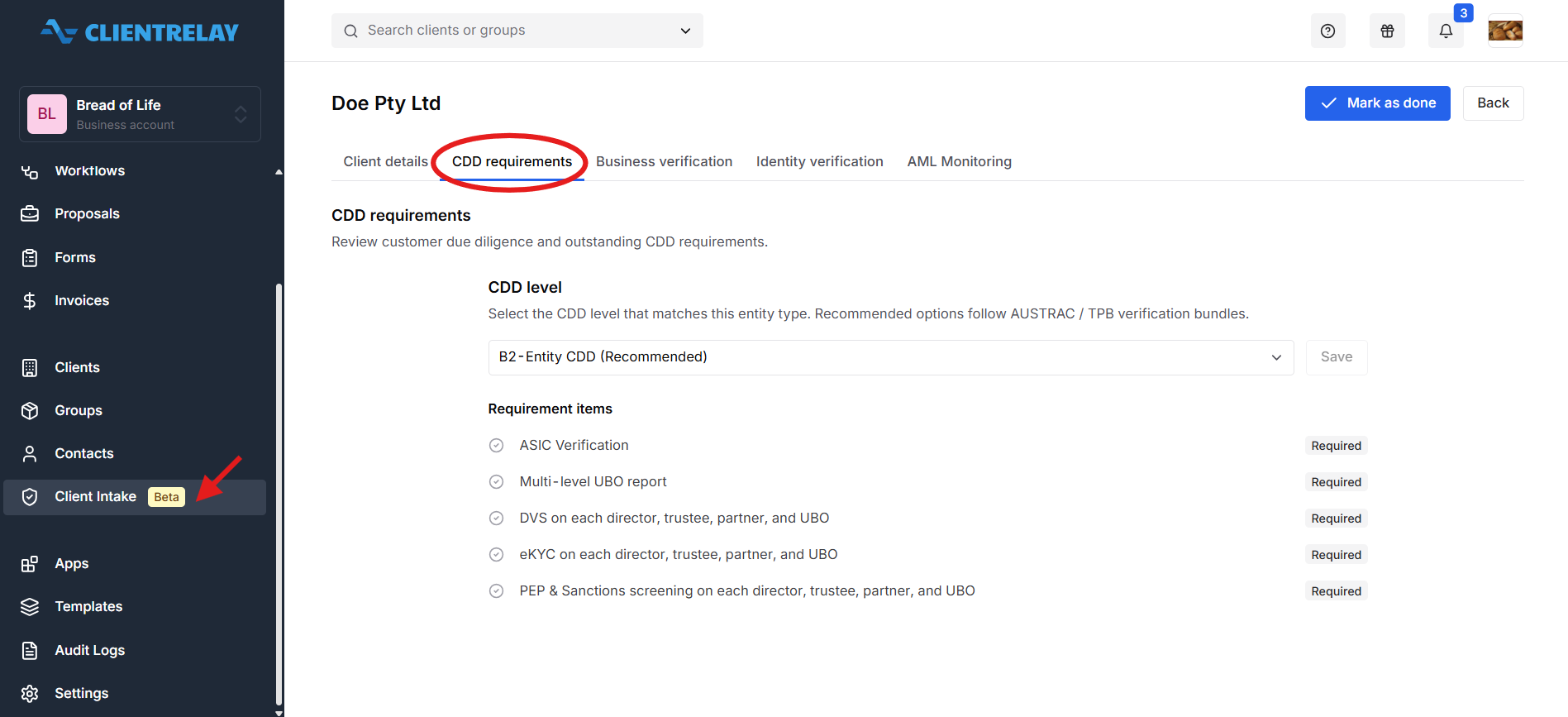
The CDD Requirements section allows users to review Customer Due Diligence (CDD) information and identify any outstanding requirements.
CDD involves collecting and assessing information about a client to help establish their identity and understand the nature of the client relationship.
How it works:
Open the CDD Requirements section.
Review the listed due diligence requirements.
Check which requirements have been completed and which remain outstanding.
Obtain any missing information or documentation from the client.
Review the status again to confirm that the applicable requirements have been addressed.
Purpose: To help users track due diligence requirements and identify outstanding items that may need attention before onboarding can be completed.
In Australia, Customer Due Diligence (CDD) under the AML/CTF regime requires reporting entities to establish and verify client identity before providing designated services.
Australian CDD Requirements
- Initial CDD: Entities must collect Know Your Customer (KYC) information to establish identity, understand the purpose of the business relationship, and assess the customer's money laundering and terrorism financing (ML/TF) risk.
- Beneficial Ownership: For companies and trusts, businesses must follow the chain of ownership to identify Ultimate Beneficial Owners (UBOs) who hold 25% or more of the entity or have decision-making control.
- Verification: Identities must be verified using reliable, independent data. The Tax Practitioners Board (TPB) similarly requires Proof of Identity (POI) checks using primary photographic identification or a combination of primary non-photographic and secondary documents.
- Screening: Entities must screen clients, representatives, and UBOs to determine if they are Politically Exposed Persons (PEPs) or subject to targeted financial sanctions.
- Risk-Based Due Diligence: Simplified CDD is permitted for demonstrably low-risk customers, while Enhanced Due Diligence (EDD) is mandatory for high-risk profiles (e.g., foreign PEPs), requiring additional checks into the source of wealth and funds.
- Record Keeping: AUSTRAC requires CDD activity records to be stored for seven years, whereas the TPB mandates keeping POI check records for five years.
ClientRelay operates as a compliance management platform that operationalizes AUSTRAC and TPB guidelines into automated software workflows.
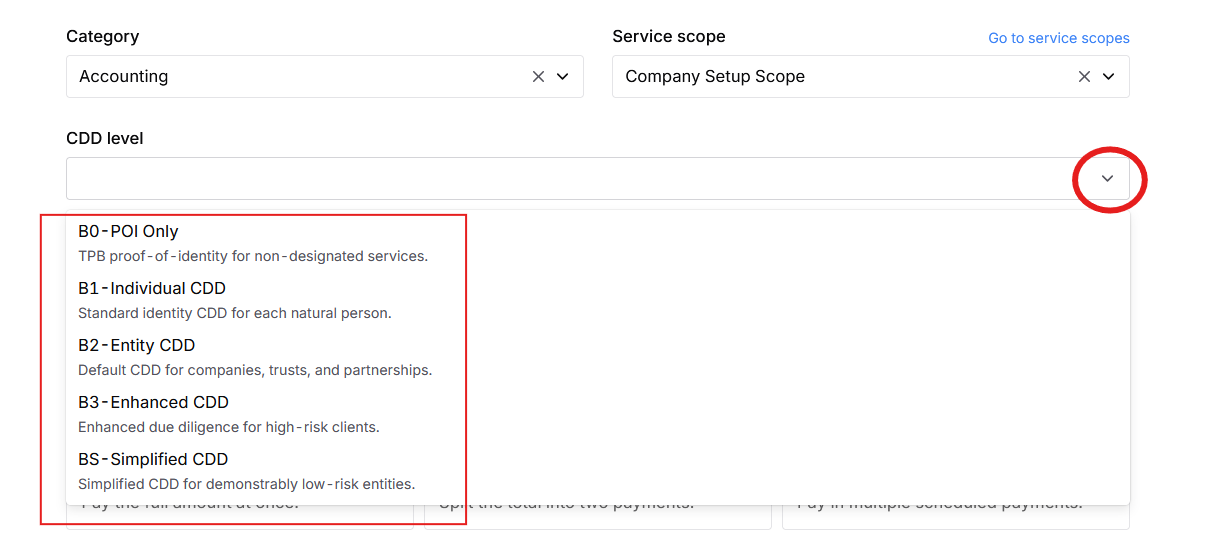
Tiered Compliance Bundles: the software offers a dropdown to assign specific CDD levels based on entity type and risk profile. Options include "B0 - POI Only" (for basic TPB rules), "B1 - Individual CDD", "B2 - Entity CDD", "B3 - Enhanced CDD" for high-risk clients, and "BS - Simplified CDD". The system prevents users from selecting individual tiers (B0, B1) for entity clients.
Automated Requirement Checklists: selecting "B2 - Entity CDD" for a corporate client (Noble Avenue Pty Ltd) automatically populates a mandatory task list designed to satisfy corporate CDD laws.
Enforced Verification Steps: To comply with entity and UBO identification laws, the software mandates "ASIC Verification" and a "Multi-level UBO report" . Furthermore, it requires Document Verification Service (DVS) checks, electronic KYC (eKYC), and PEP & Sanctions screening for every underlying natural person associated with the entity (directors, trustees, partners, and UBOs)
Notes:
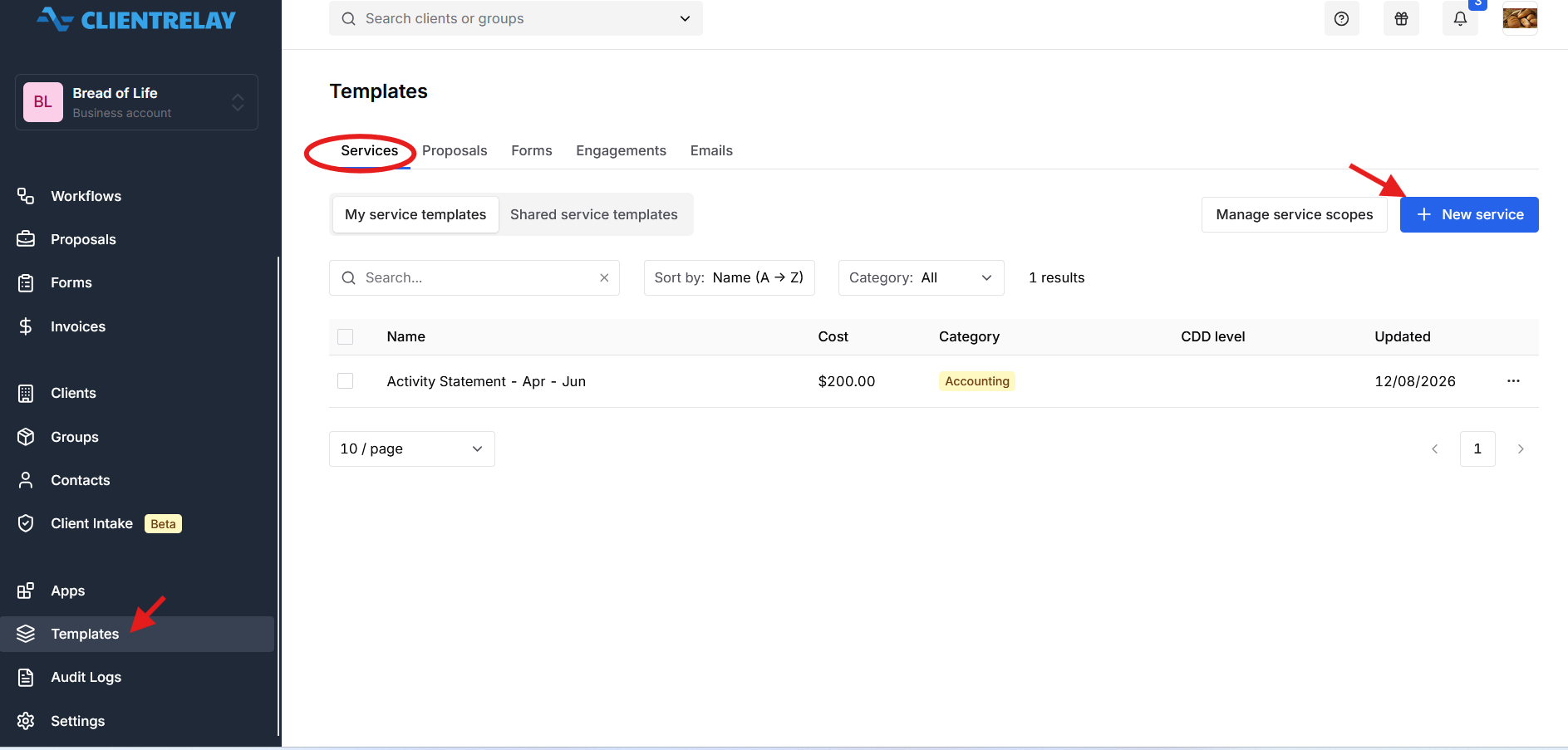
- "CDD Level" - Users can set the "CDD LEVEL" when creating service templates.
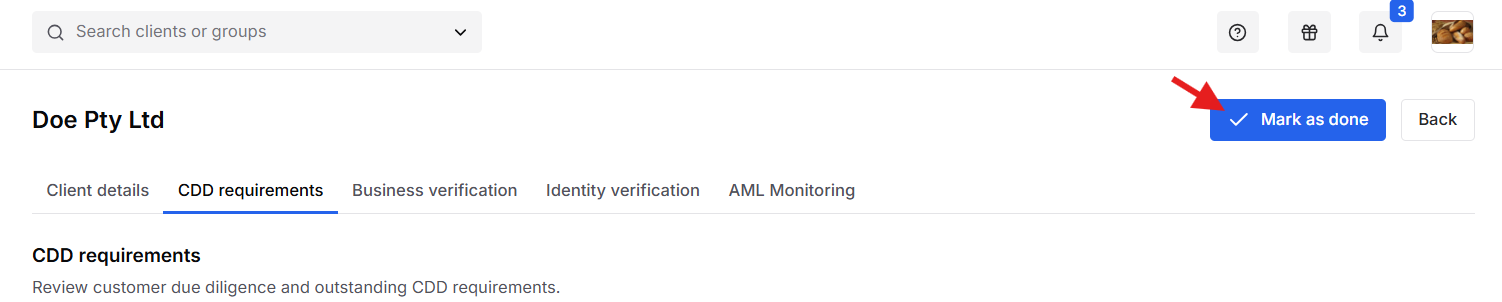
- "Mark as Done" - Client onboarding can only be completed when the contact has submitted their information.
Was this article helpful?
That’s Great!
Thank you for your feedback
Sorry! We couldn't be helpful
Thank you for your feedback
Feedback sent
We appreciate your effort and will try to fix the article